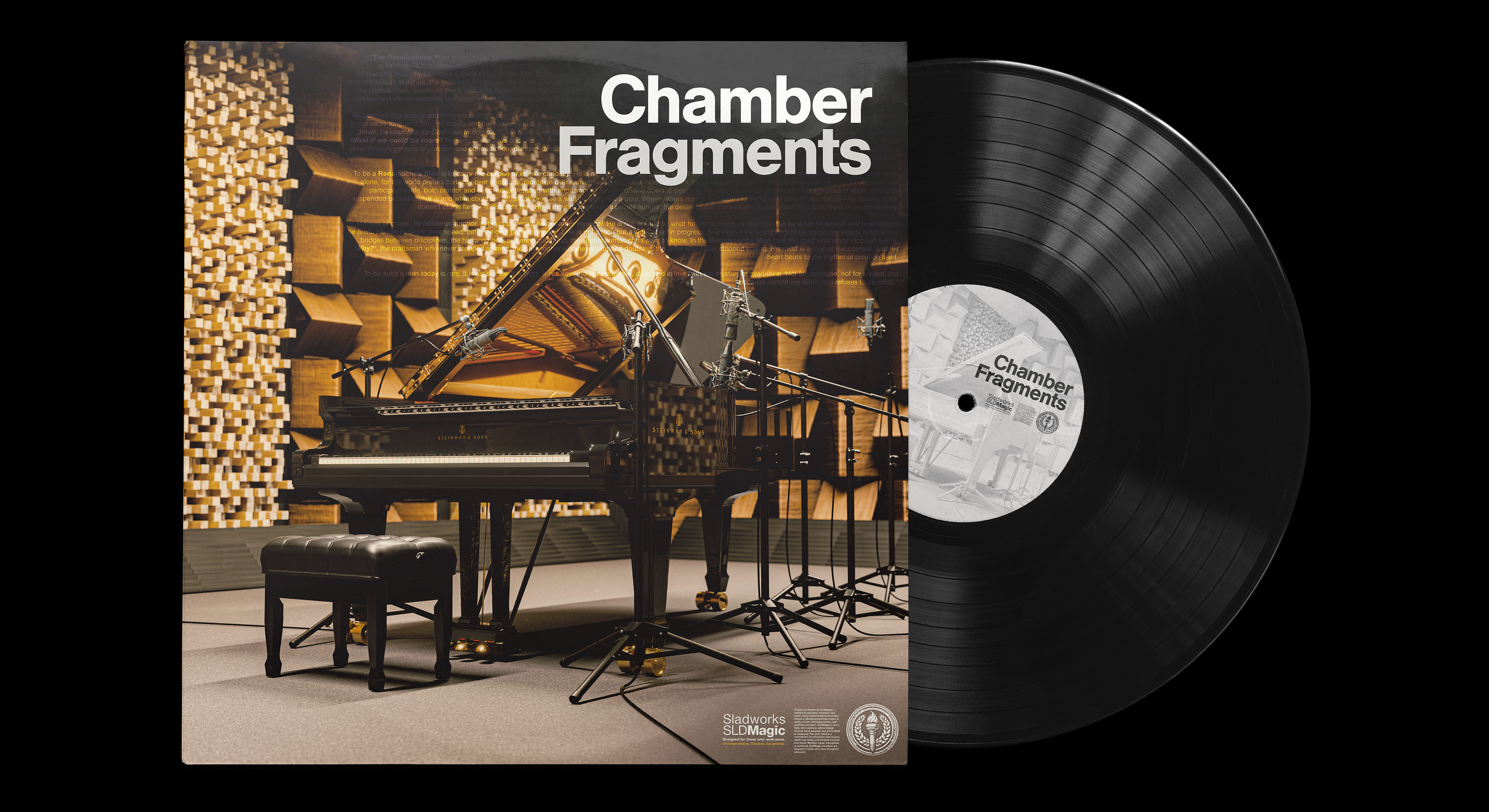
Chamber Fragments is a curated piano program built around late-Romantic repertoire, moving from the weight and density of Rachmaninoff toward the large-scale structure of Liszt’s Sonata in B minor. The sequence follows a gradual shift in form and intensity, passing through Chopin’s instability, Brahms’ inward writing, and Schubert’s suspended lyricism.
The title is meant quite literally. The “chamber” is not chamber music in the traditional sense, but an enclosed space in which sound exists and reflects. It refers both to a constructed acoustic environment and to a more internal space, where each piece is contained and self-sufficient. The focus is not on simulating a concert hall, but on defining a controlled listening space.
The idea of “fragments” defines how the program is built. These are not presented as parts of a continuous narrative, but as separate pieces taken from larger musical worlds. Some are brief and intimate, others are more extended and structural. Their differences in scale are intentional. Each work stands on its own, without being forced into a single overarching story.
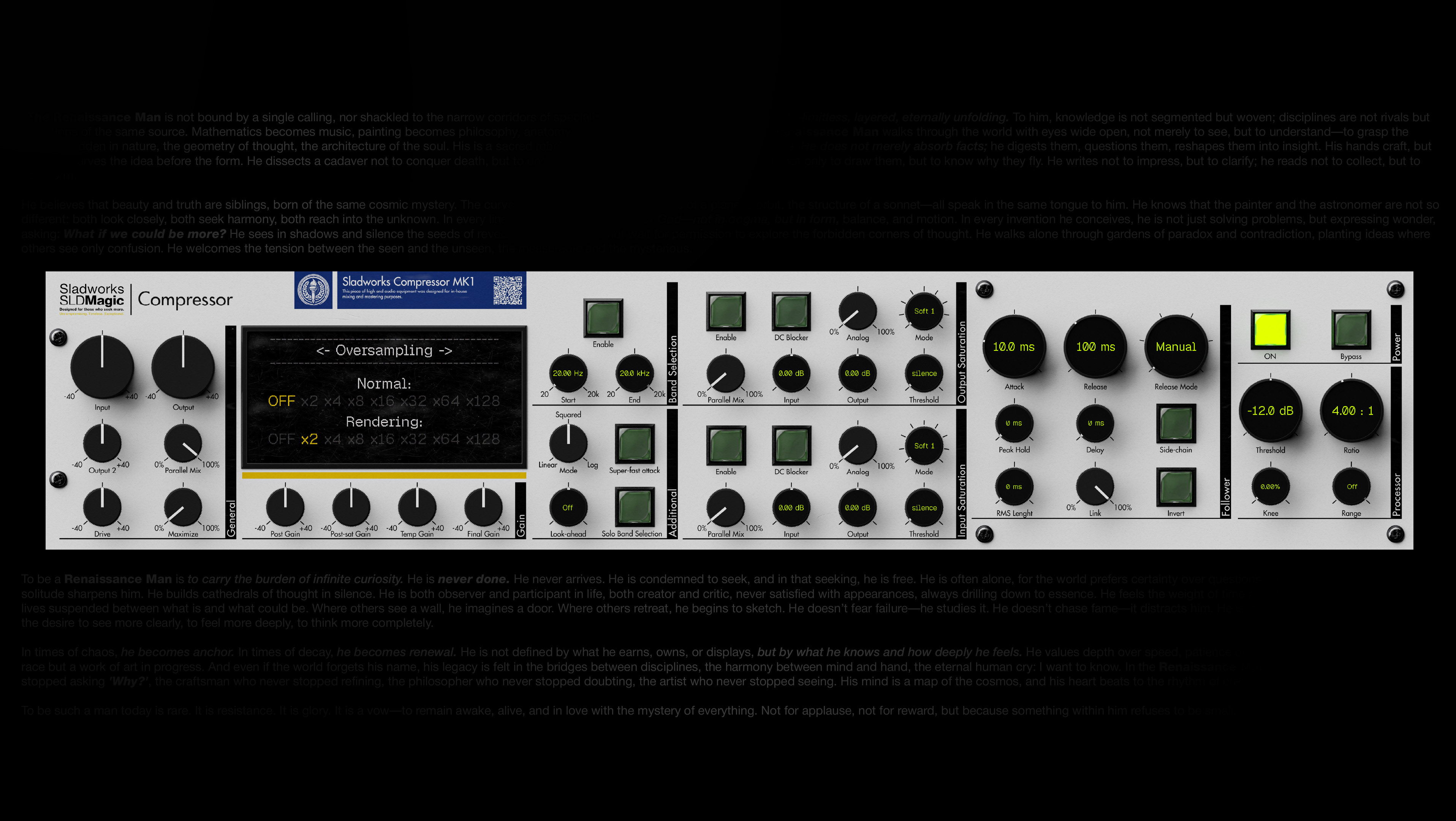
This is not a traditional performance-driven recording. The project is approached as a production and engineering study, where interpretation is shaped through sound, dynamics, and balance. Each piece was treated individually, with adjustments in compression and level to control how it is perceived, while keeping a consistent tonal character across the entire program.
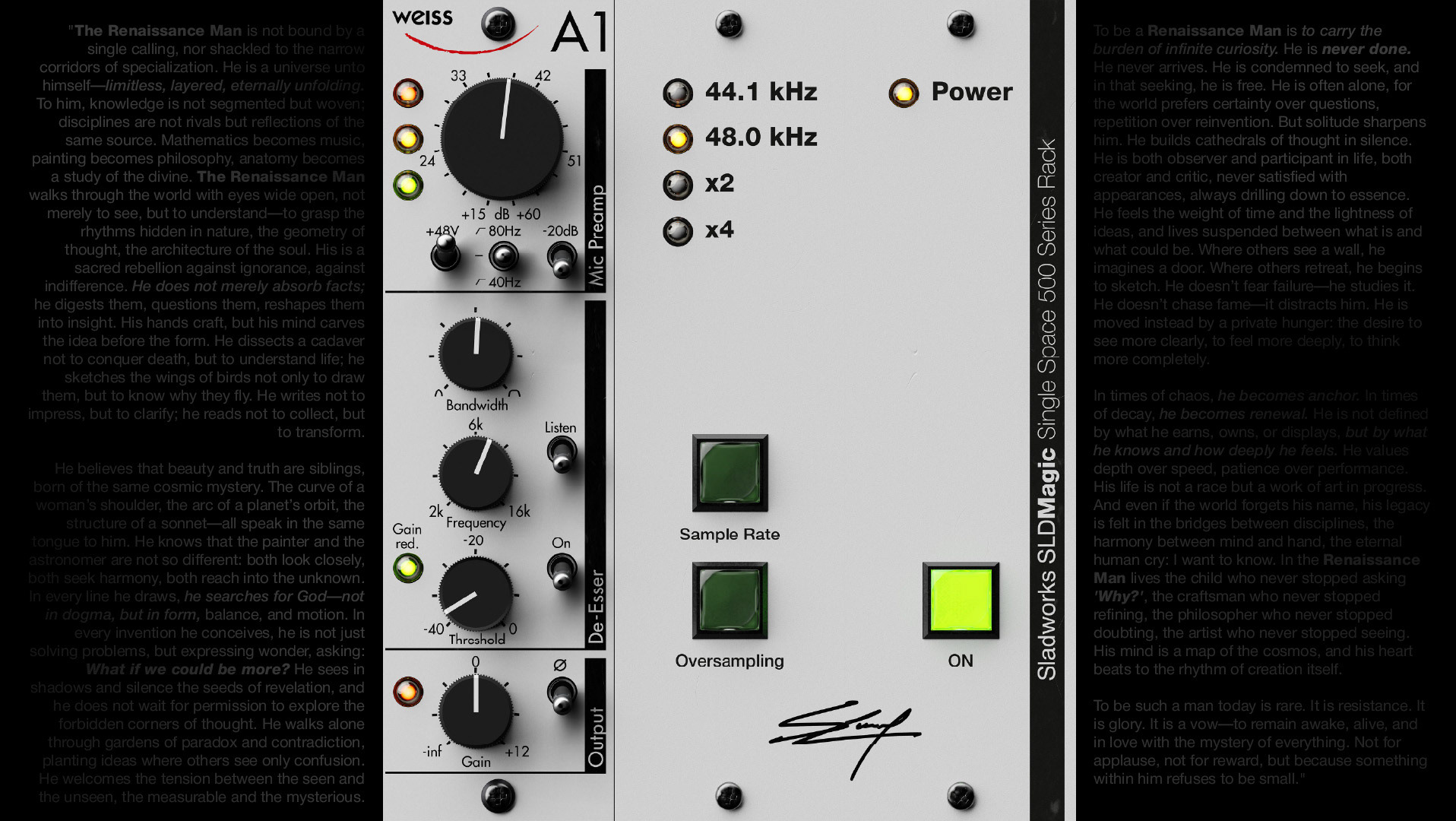
The processing chain, built around MeldaProduction and Weiss mastering plugins, was used with restraint. The goal was not to color the sound, but to refine it. Dynamics are stabilized, details are brought forward, and the acoustic space is shaped in a deliberate way.
In this context, the piano is not treated as a central performer, but as a sound source within a system. The emphasis shifts toward how the material is presented and controlled. Each track becomes an individual object placed within the same space.
The Liszt Sonata at the end plays a different role. It is the largest piece in the program and comes closest to forming a complete structure on its own. Everything before it feels more partial by comparison. The program does not resolve into a single unified whole, but the Sonata gives a sense of scale that reframes what comes before it.
Chamber Fragments is ultimately a collection of works presented as they are, each placed within a defined acoustic space, without forcing them into a single narrative.
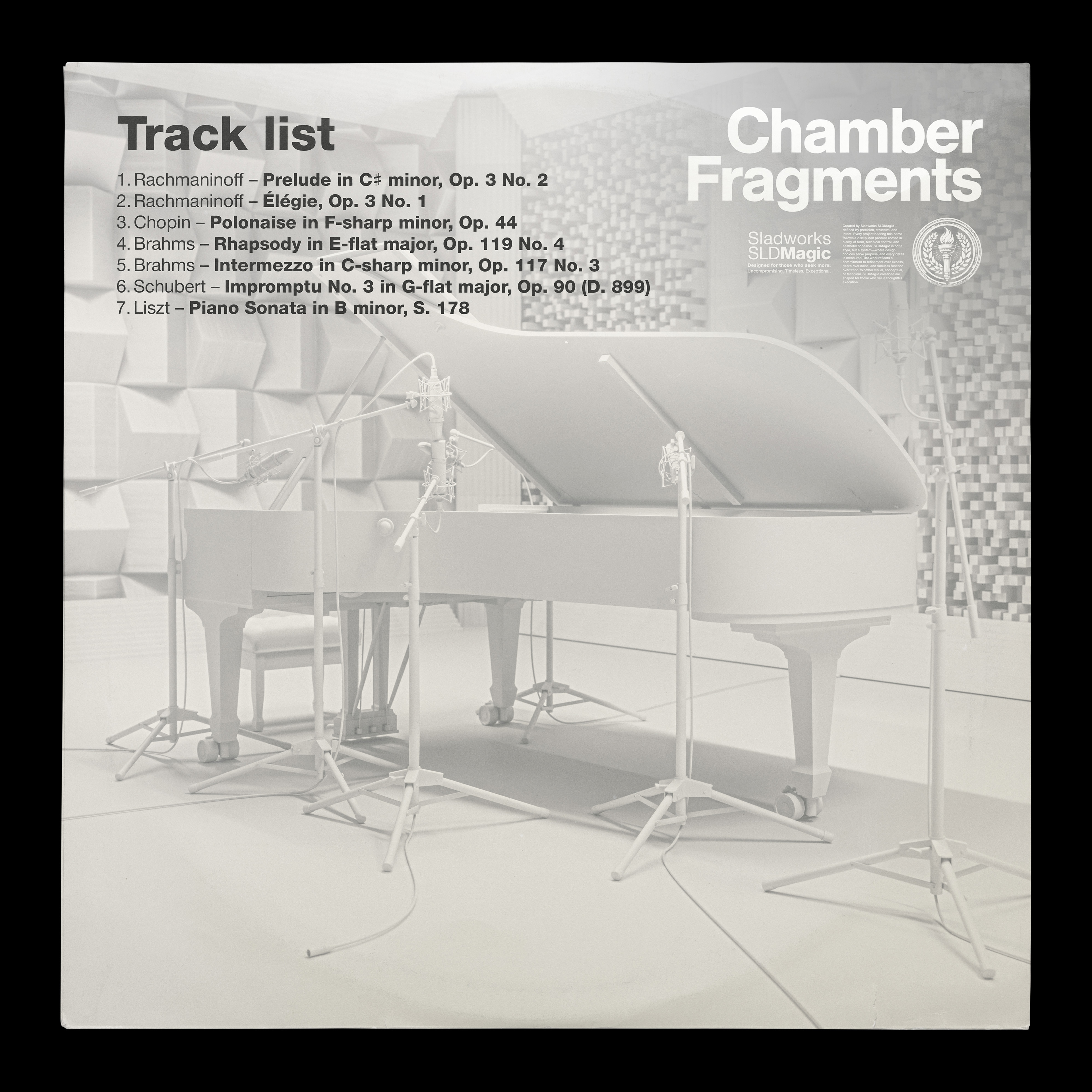
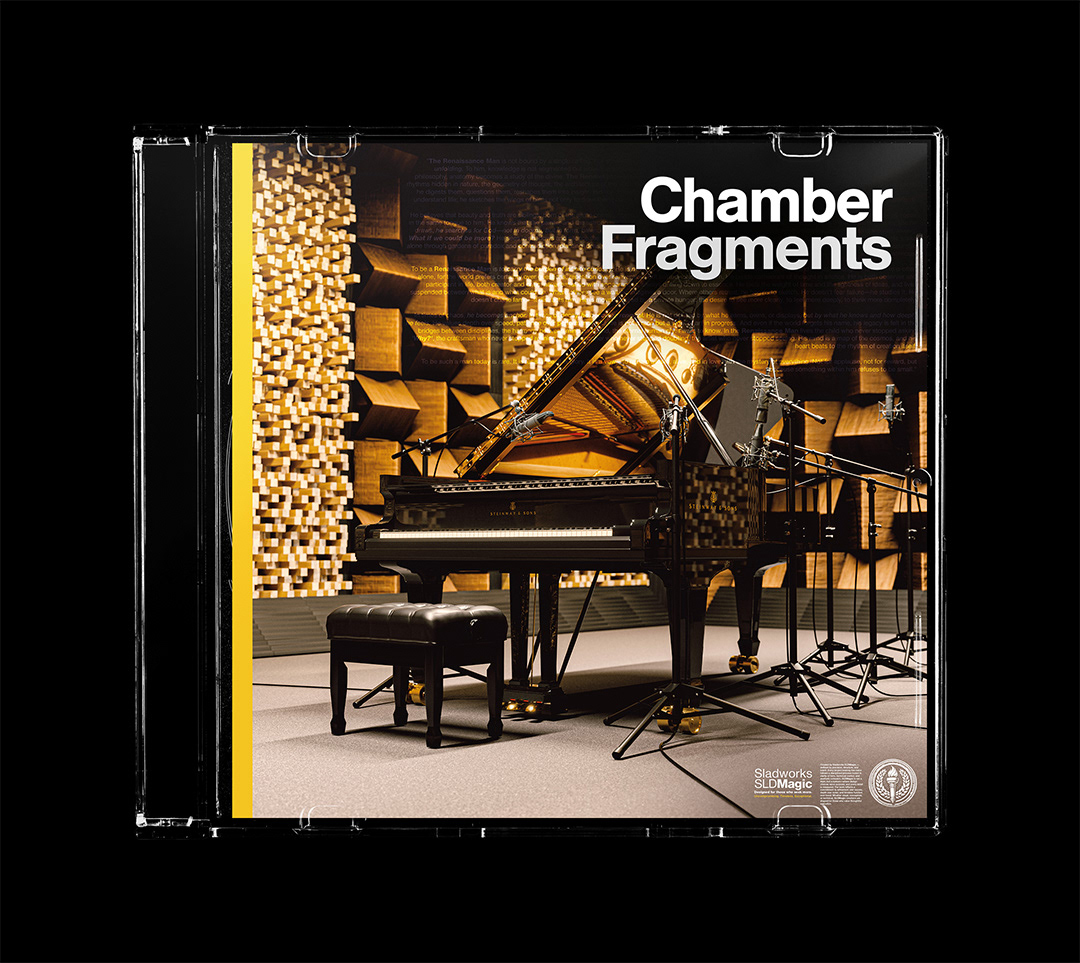
The album is mastered with the CD format in mind (Red Book standard). All material is prepared at 44.1 kHz / 16-bit for distribution, with careful control of dynamics and level to ensure consistent playback across a full program. The sequencing and spacing between tracks are also designed with the CD format as a continuous listening medium, rather than a collection of isolated files.
While the total duration slightly exceeds what would comfortably fit on a single vinyl record, the project is not intended as a vinyl release in a technical sense. The program is structured around continuity and dynamic range rather than the physical constraints of groove spacing and side length.
The vinyl record instead appears as a visual and conceptual object. In a digital context, it represents the physical form that recorded music once depended on, now detached from its original function. It remains as a display piece — a symbolic carrier of the music rather than the medium through which it is actually experienced.